

The Artificial Pancreas System in Children: A Real Revolution in Diabetes Treatment
Introduction
Type 1 diabetes is one of the most common chronic diseases in childhood. In this condition, the pancreas no longer produces insulin due to autoimmune destruction of insulin-producing beta cells.
As a result, children with diabetes must rely on external insulin administration for survival.
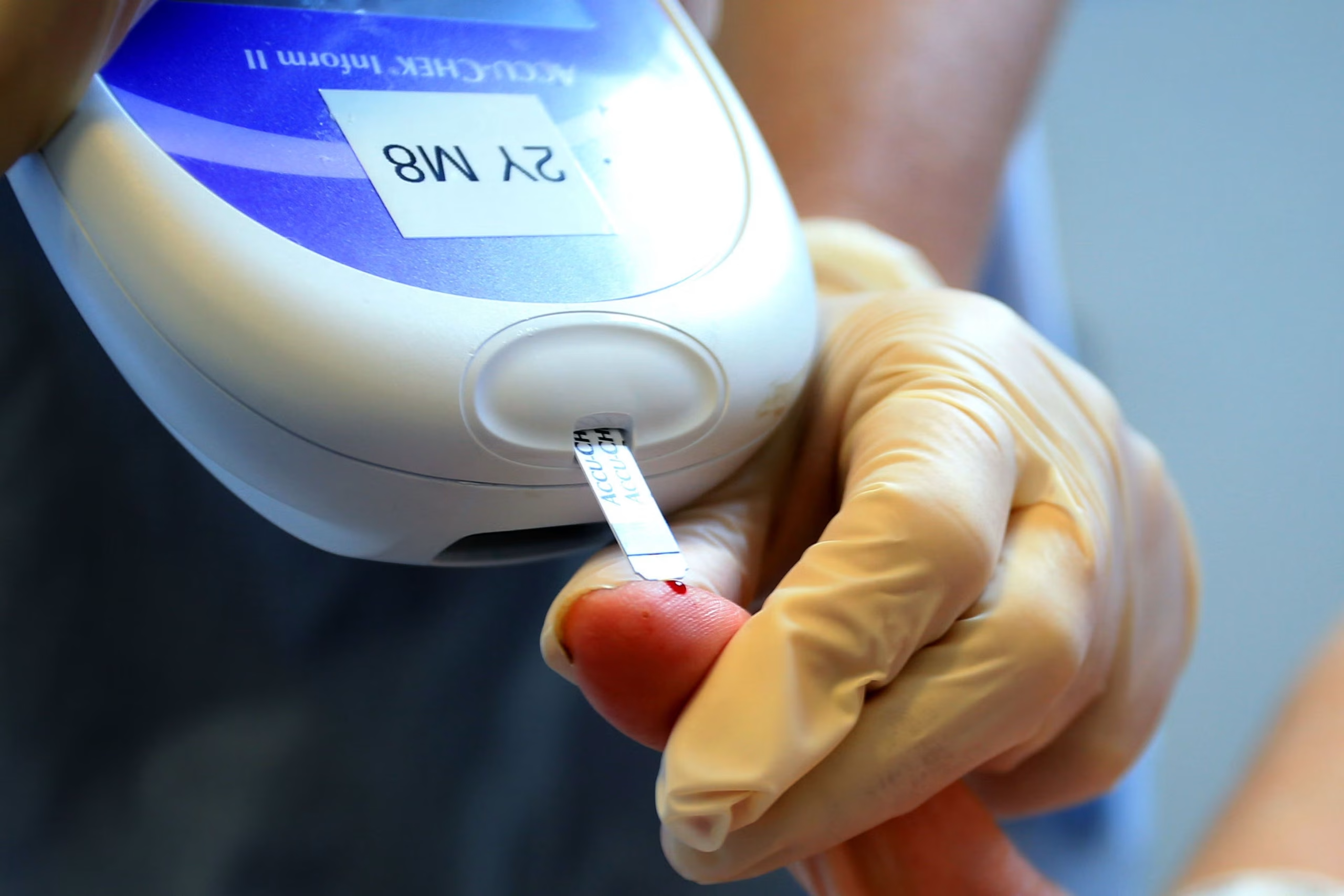
For decades, this has meant multiple daily finger pricks, frequent insulin injections, constant monitoring of blood sugar levels, and a heavy psychological and practical burden on both children and their families.
In recent years, a groundbreaking technological innovation known as the artificial pancreas system (APS)—also called a closed-loop insulin delivery system—has emerged.
This technology represents one of the most significant advances in pediatric diabetes care since the discovery of insulin a century ago. Many experts now describe it as a true revolution in the management of diabetes in children.
What Is an Artificial Pancreas?
Despite its name, the artificial pancreas is not a biological organ. Instead, it is a sophisticated medical technology that mimics the function of a healthy pancreas by automatically regulating blood glucose levels.
A typical artificial pancreas system consists of three main components:
1. Continuous Glucose Monitor (CGM):
A small sensor placed under the skin measures glucose levels in the interstitial fluid every few minutes and sends this data wirelessly to a device.
2. Insulin Pump:
A wearable device that delivers rapid-acting insulin continuously through a small tube or patch attached to the body.
3. Smart Algorithm (Controller):
A computer program—often embedded in a pump or smartphone—that analyzes glucose data in real time and adjusts insulin delivery automatically.
Together, these components form a closed-loop system: the CGM measures glucose, the algorithm decides how much insulin is needed, and the pump delivers the appropriate dose—much like a healthy pancreas would.
Why Is This Especially Important for Children?
Managing diabetes in children is uniquely challenging for several reasons:
Unpredictable eating habits: Children may eat irregularly or have difficulty estimating carbohydrate intake.
Variable activity levels: Play, sports, and growth spurts can drastically affect blood sugar.
Risk of hypoglycemia: Low blood sugar can be dangerous, especially at night when parents may not notice symptoms.
Psychological burden: Constant monitoring can cause stress, anxiety, and burnout for both children and caregivers.
The artificial pancreas reduces many of these challenges by automating much of the decision-making process. Instead of parents constantly calculating insulin doses, the system adjusts insulin delivery minute by minute.
Key Benefits of the Artificial Pancreas in Children
1. Better Blood Sugar Control
Studies have consistently shown that children using artificial pancreas systems spend more time in the target glucose range (70–180 mg/dL) compared to those using traditional insulin therapy.
This reduces both hyperglycemia (high blood sugar) and hypoglycemia (low blood sugar).
2. Reduced Risk of Dangerous Hypoglycemia
One of the most significant advantages is improved protection against nighttime hypoglycemia. The system can detect falling glucose levels and automatically reduce or stop insulin delivery before blood sugar drops too low.
3. Improved Quality of Life
Parents report less anxiety, better sleep, and reduced mental load. Children experience fewer disruptions to school, sports, and social activities. Many families describe the system as “life-changing.”
4. Less Need for Constant Decision-Making
While users still need to input meal information in many systems, the algorithm handles much of the fine-tuning, making diabetes management less overwhelming.
Scientific Evidence Supporting Artificial Pancreas Use in Children
Multiple clinical trials have demonstrated the safety and effectiveness of artificial pancreas systems in pediatric populations.
For example, studies have shown that:
Children using closed-loop systems spend significantly more time in the target glucose range.
The frequency of severe hypoglycemia is reduced.
Overall HbA1c levels (a measure of long-term glucose control) improve or remain stable with less variability.
These findings have led major diabetes organizations to support the use of artificial pancreas systems in children, including those as young as 2–6 years old in some cases.

Limitations and Challenges
Despite its many advantages, the artificial pancreas is not perfect.
1. Not Fully Automatic (Yet)
Most current systems still require users to announce meals and estimate carbohydrates. Research is ongoing to develop fully automated systems that require minimal input.
2. Cost and Accessibility
These systems can be expensive, and access varies by country and healthcare system. Insurance coverage is improving but remains inconsistent.
3. Technical Issues
Sensor failures, pump malfunctions, or connectivity problems can occasionally occur, requiring user intervention.
4. User Learning Curve
Families need training and support to use the system effectively.
The Future: Toward a Truly “Bionic” Pancreas
Researchers are working on next-generation systems that include both insulin and glucagon (a hormone that raises blood sugar), known as dual-hormone artificial pancreas systems.
These could provide even tighter glucose control and further reduce hypoglycemia risk.
Other promising developments include:
More accurate glucose sensors
Longer-lasting insulin formulations
Fully automated meal detection
Integration with smartphones and smartwatches
Many experts believe that within the next decade, artificial pancreas systems will become the standard of care for most children with type 1 diabetes.
Conclusion: A Real Revolution
The artificial pancreas represents a major paradigm shift in pediatric diabetes care. It transforms diabetes management from a manual, stressful, and error-prone process into a more automated, precise, and humane system.
For children with diabetes—and their families—this technology offers not just better medical outcomes, but something equally important: a more normal childhood.
Real-World Experience: What Families Actually Report
Beyond clinical trials, the true impact of the artificial pancreas is best seen in the daily lives of children and their families.
A More Peaceful Night’s Sleep
One of the most frequently reported benefits from parents is improved sleep. Before using an artificial pancreas, many parents wake up multiple times per night to check their child’s blood sugar, fearing a dangerous hypoglycemic episode.
With closed-loop systems, they gain reassurance because the device continuously monitors glucose and adjusts insulin automatically.
Some parents describe this as “getting their nights back,” which has profound effects on family well-being, mental health, and daily functioning.
More Freedom for Children
Children using artificial pancreas systems often feel less “different” from their peers. They can participate in sports, school activities, and social events with fewer interruptions.
Instead of stopping frequently to check blood sugar or receive insulin, much of the management happens in the background.
Teenagers, in particular, appreciate the reduced burden, as diabetes management during adolescence can be especially challenging due to lifestyle changes, peer pressure, and emotional fluctuations.
Reduced Diabetes Burnout
“Diabetes burnout” is a real phenomenon, where children and parents feel overwhelmed, exhausted, and frustrated by constant disease management.
By automating many aspects of insulin delivery, artificial pancreas systems significantly reduce this psychological burden.
Ethical and Social Considerations
While the artificial pancreas is a medical breakthrough, it also raises important ethical and social questions.
Equality of Access
One major concern is that not all children have equal access to this technology.
In high-income countries, many healthcare systems are beginning to cover artificial pancreas systems, but in low- and middle-income countries, access remains limited.
This creates a gap where some children benefit from cutting-edge technology while others still struggle with basic insulin access.
Dependence on Technology
Another debate concerns increasing reliance on medical devices. Some worry that families may become overly dependent on technology, potentially reducing their ability to manage diabetes manually in case of device failure. For this reason, education and backup plans remain essential.
Data Privacy
Artificial pancreas systems collect large amounts of personal health data, often transmitted to cloud-based platforms. Ensuring data security and patient privacy is a growing concern in the digital health era.
Artificial Pancreas vs. Traditional Treatment: A Comparison
| Aspect | Traditional Treatment | Artificial Pancreas |
|---|---|---|
| Blood sugar monitoring | Frequent finger pricks | Continuous automatic monitoring |
| Insulin dosing | Manual calculations | Algorithm-based automation |
| Risk of hypoglycemia | Higher, especially at night | Significantly reduced |
| Burden on parents | Very high | Considerably lower |
| Quality of life | Often stressful | Generally improved |
| Precision | Depends on human decisions | More consistent and data-driven |
This comparison highlights why many clinicians consider the artificial pancreas a revolutionary step forward rather than just an incremental improvement.
Case Example (Illustrative, Not a Real Patient)
Consider a 9-year-old child with type 1 diabetes who previously experienced frequent nighttime hypoglycemia and daytime blood sugar fluctuations due to unpredictable eating and activity.
After switching to an artificial pancreas system:
Time in target glucose range increased from 55% to 80%.
Nighttime hypoglycemic episodes dropped from several per week to almost zero.
The child became more confident in participating in sports.
Parents reported less anxiety and better sleep.
This kind of transformation is being reported by many families worldwide.
What This Means for the Future of Pediatric Diabetes Care
The artificial pancreas is not just a new device—it represents a shift in how we think about chronic disease management in children.
Instead of expecting young patients and their families to perform complex medical calculations every day, we are moving toward a model where intelligent technology supports and enhances human care.
Many experts now predict that:
Within 5–10 years, most children with type 1 diabetes in developed countries will use some form of closed-loop system.
Future systems will require minimal user input.
Diabetes-related complications (such as eye, kidney, and nerve damage) may decrease due to better long-term glucose control.
Final Conclusion: More Than a Technology—A New Era
The artificial pancreas system in children is not just a medical innovation; it is a real revolution in diabetes care.
It changes:
how children live with diabetes,
how parents experience caregiving, and
how doctors approach treatment.
While challenges remain—especially regarding cost and access—the trajectory is clear: automated insulin delivery systems are transforming pediatric diabetes from a relentlessly demanding condition into one that can be managed more safely, smoothly, and humanely.
Implications for Healthcare Systems and Clinical Practice
The arrival of artificial pancreas systems is not only changing the lives of children and families—it is also transforming how healthcare professionals manage pediatric diabetes.
Changing Role of the Diabetes Care Team
Traditionally, pediatric diabetes care has relied heavily on frequent clinic visits, detailed insulin adjustments by physicians, and constant education for families.
With closed-loop systems, some of this workload shifts from humans to algorithms.
As a result, the role of healthcare providers is evolving toward:
Training families to understand and trust the system
Interpreting device data rather than micromanaging insulin doses
Focusing more on psychological support, nutrition, and lifestyle rather than purely technical insulin adjustments
Many clinicians report that visits are becoming less about “fixing numbers” and more about overall well-being.
Reduced Hospitalizations and Emergencies
Better glucose stability means fewer emergency room visits for severe hypoglycemia or diabetic ketoacidosis (DKA). In the long run, this could reduce healthcare costs and strain on medical systems.
Some early economic analyses suggest that although artificial pancreas systems are expensive upfront, they may save money over time by preventing complications and hospitalizations.
Impact on Long-Term Health of Children with Diabetes
One of the most important questions is whether artificial pancreas systems will reduce long-term diabetes complications.
Potential Reduction in Chronic Complications
Chronic complications of type 1 diabetes—such as retinopathy (eye damage), nephropathy (kidney disease), and neuropathy (nerve damage)—are strongly linked to long-term blood sugar control.
Because artificial pancreas systems improve “time in range” and reduce glucose variability, researchers are optimistic that widespread use could lead to:
Lower rates of eye disease in adulthood
Better kidney function over time
Reduced risk of nerve damage
Overall healthier outcomes for a generation of children with diabetes
However, because these complications develop over many years, long-term studies are still ongoing.
Psychological and Developmental Effects
Beyond physical health, artificial pancreas systems may have important psychological benefits for children.
Improved Self-Esteem and Independence
Older children and adolescents often struggle with feeling “different” because of diabetes. A system that works quietly in the background allows them to feel more “normal,” which can improve self-esteem and social confidence.
Some teenagers report feeling more in control of their lives rather than controlled by their disease.
Reduced Family Stress
Diabetes affects not only the child but the entire family. Constant worry about blood sugar can create chronic stress, marital tension, and parental burnout.
By reducing the need for constant vigilance, artificial pancreas systems can improve family dynamics and mental health.
Current Generations vs. Future Generations of Systems
Current Generation (Hybrid Closed-Loop)
Most systems available today are “hybrid” closed-loop, meaning:
They automate basal (background) insulin delivery
Users still need to announce meals and bolus for carbohydrates
Examples include systems like Medtronic 780G, Tandem Control-IQ, and Omnipod 5 (names mentioned for general context).
Next Generation (Fully Closed-Loop or Bihormonal Systems)
Researchers are working on:
Fully automated systems that do not require meal announcements
Dual-hormone systems that deliver both insulin and glucagon, more closely mimicking a real pancreas
Faster-acting insulins that respond more quickly to glucose changes
These advancements could make diabetes management even simpler and safer.
Challenges That Still Need to Be Solved
Despite remarkable progress, several obstacles remain.
1. Accessibility and Global Inequality
Millions of children with diabetes worldwide still lack reliable access to basic insulin, let alone advanced technology. The ethical challenge is ensuring that innovation does not widen global health disparities.
2. Technology Fatigue
Some families feel overwhelmed by wearable devices, alarms, and data. Not every child or family wants to be constantly connected to technology.
3. Algorithm Limitations
No algorithm is perfect. Situations such as:
Sudden intense exercise
Illness or fever
Hormonal changes during puberty
can still challenge the system and require human intervention.
A Vision for the Next 10–20 Years
If current trends continue, the future of pediatric diabetes care may look like this:
Most children with type 1 diabetes will use fully automated insulin delivery systems.
Finger-prick glucose checks may become rare or unnecessary.
Devices will be smaller, more discreet, and more comfortable.
Integration with smartphones and smartwatches will make monitoring seamless.
Artificial intelligence will further personalize insulin delivery based on each child’s unique physiology.
Some researchers even hope that by the time today’s newly diagnosed children reach adulthood, living with diabetes will be dramatically easier than it is today.
Final Reflection: Why This Is Truly Revolutionary
The artificial pancreas is revolutionary because it shifts diabetes care from constant human effort to intelligent automation.
It does not cure diabetes—but it comes closer than anything before to replicating the natural function of the human body.
For children, this means:
Safer blood sugar levels
More freedom
Less fear
A childhood less dominated by disease
For parents, it means:
Less anxiety
Better sleep
Greater peace of mind
And for medicine, it represents a powerful example of how technology, biology, and human-centered design can come together to transform lives.