
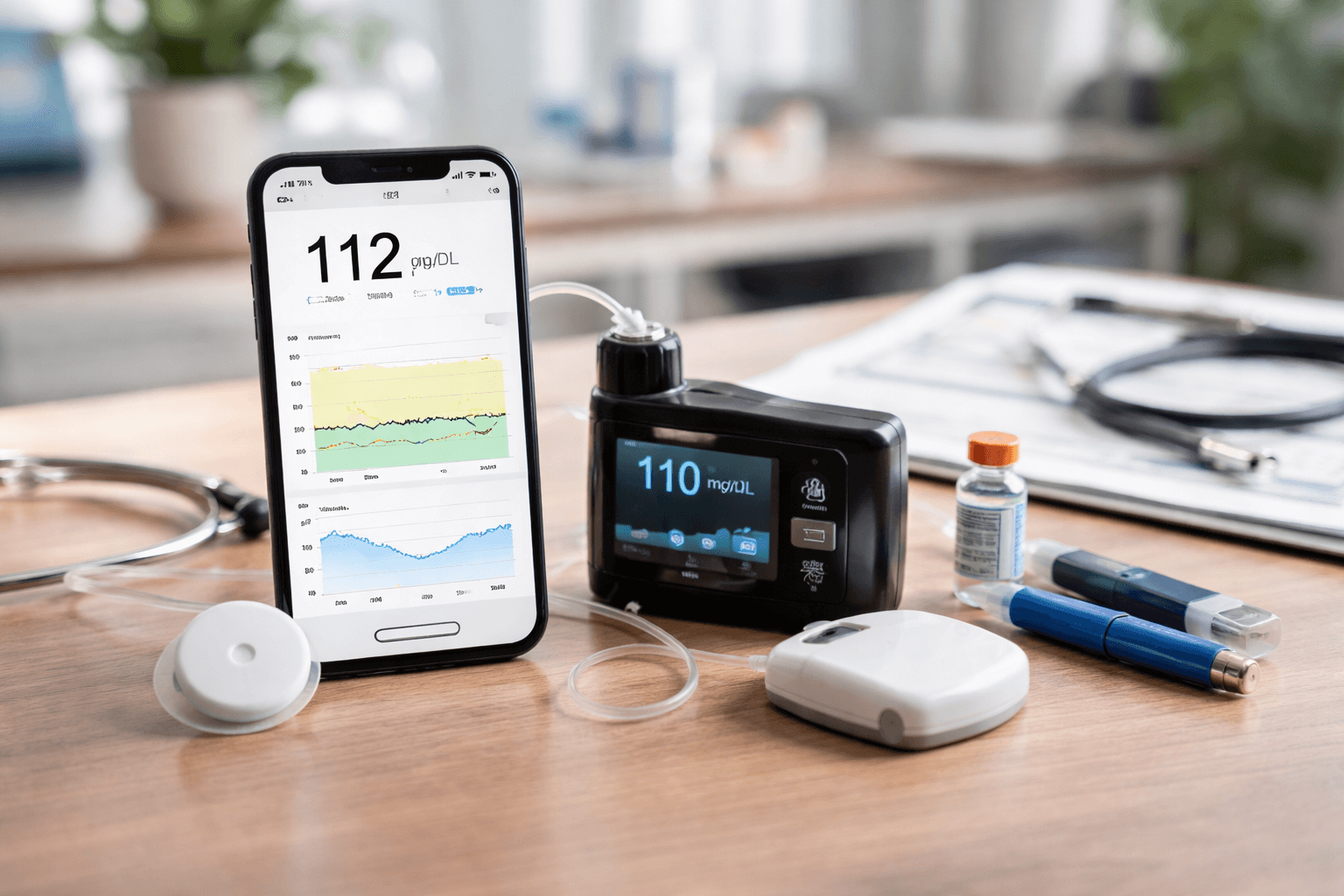
A Comparison of New Blood Glucose Monitoring Technologies in 2026
Blood glucose monitoring has changed significantly in recent years. Traditional finger-stick glucose meters remain widely used, but continuous glucose monitors (CGMs), connected glucose meters, wearable sensors, and increasingly sophisticated digital diabetes platforms are changing how people measure, understand, and manage glucose levels.
In 2026, the main difference between glucose-monitoring technologies is no longer simply **how accurately a glucose value can be measured**. Modern systems increasingly focus on providing continuous information, identifying glucose trends, reducing the burden of finger-stick testing, and connecting glucose data with smartphones, healthcare professionals, and automated diabetes-management systems.
This article compares the major blood glucose monitoring technologies available in 2026, explains how they work, and examines the advantages and limitations of each approach.
1. Traditional Blood Glucose Meters
Blood glucose meters, often called glucometers, remain one of the most established methods of glucose monitoring.
A conventional meter uses a disposable test strip. A small blood sample, usually obtained from a fingertip, is applied to the strip. The meter measures the chemical or electrical reaction associated with glucose and displays the result, usually within a few seconds.
Advantages
– Generally affordable compared with continuous monitoring systems
– Fast results
– Small and portable
– Useful for confirming suspected hypoglycemia
– Does not require wearing a sensor
– Widely available
– Long-established technology
Limitations
The biggest limitation is that a traditional meter provides a **single glucose measurement at a specific moment**.
It does not continuously show whether glucose is rising or falling.
Accuracy can also be affected by factors such as:
– Expired test strips
– Improper strip storage
– Dirty or wet hands
– Insufficient blood
– Incorrect testing technique
– Extreme temperatures
– Meter or strip problems
For these reasons, proper technique and appropriate strip storage remain important.
2. Continuous Glucose Monitoring (CGM)
Continuous glucose monitoring is one of the most important developments in modern glucose monitoring.
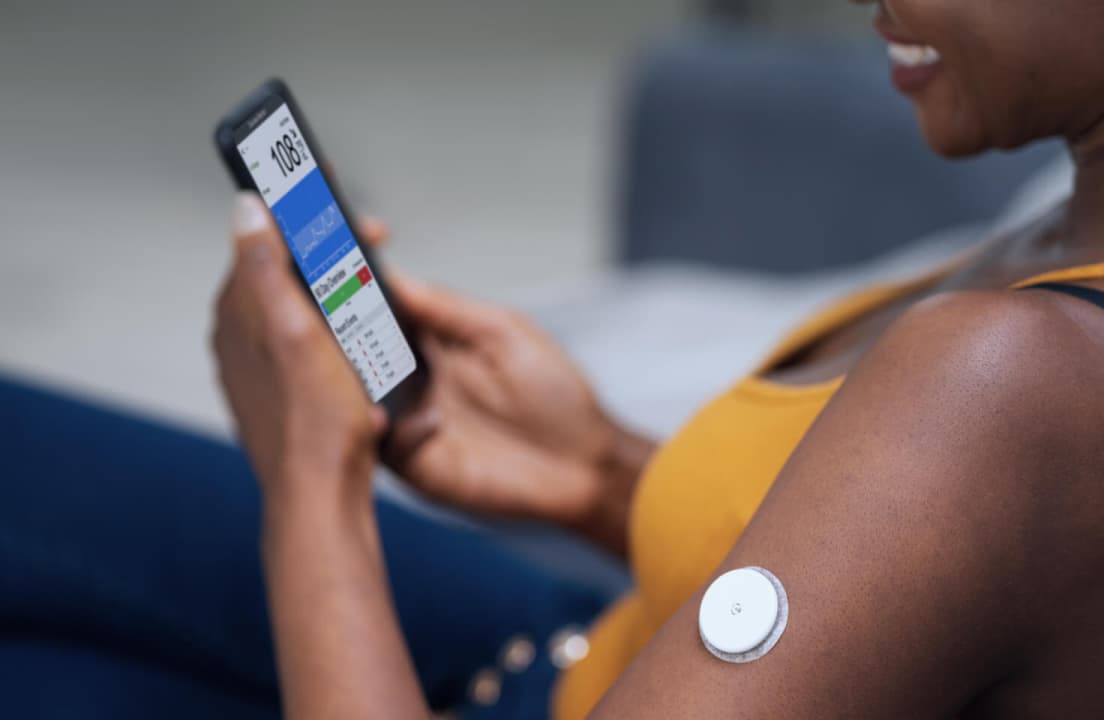
Instead of requiring a new finger-stick measurement for every reading, a CGM uses a small sensor placed under the skin. The sensor measures glucose in **interstitial fluid** and sends data to a receiver, smartphone, smartwatch, or other compatible device.
Depending on the system, glucose information can be displayed continuously or at frequent intervals.
How CGM Changes Glucose Monitoring
A traditional meter might provide information such as:
**Glucose: 145 mg/dL**
A CGM can provide considerably more context:
**Glucose: 145 mg/dL →**
or
**Glucose: 145 mg/dL ↑**
The trend arrow provides information about the direction and rate of glucose change.
This additional information can be particularly valuable for identifying:
– Overnight glucose changes
– Post-meal glucose excursions
– Exercise-related changes
– Patterns of hypoglycemia
– Patterns of hyperglycemia
– Glucose variability
Advantages of CGMs
– Continuous or frequent glucose information
– Trend arrows
– Alerts for high and low glucose
– Reduced dependence on routine finger-stick testing
– Ability to review historical glucose patterns
– Smartphone connectivity in many systems
– Useful for identifying patterns that occasional finger-stick testing can miss
Limitations
CGMs are not identical to blood glucose meters.
The sensor measures glucose in **interstitial fluid**, rather than directly measuring glucose in a drop of blood. Because glucose must move between the bloodstream and interstitial fluid, CGM readings can sometimes lag behind blood glucose, particularly when glucose levels are changing rapidly.
Sensors also have a limited lifespan and must be replaced according to the manufacturer’s schedule.
3. Real-Time CGM vs. Intermittently Scanned CGM
Not all CGM systems operate in exactly the same way.
Real-Time CGM
Real-time systems automatically transmit glucose information to a compatible receiver, smartphone, or other device.
Depending on the system, users may receive:
– Current glucose values
– Trend information
– High-glucose alerts
– Low-glucose alerts
– Predictive alerts
– Historical glucose reports
This makes real-time CGM particularly useful for people who need continuous awareness of glucose changes.
Intermittently Scanned Systems
Some systems require the user to scan or otherwise interact with the sensor to retrieve glucose information.
These systems can still provide extensive glucose data, but the user experience differs from a fully automatic real-time system.
The distinction between these categories has become less clear as newer systems increasingly offer smartphone connectivity and automatic data transmission.
4. Smart Glucose Meters
Traditional glucose meters are also becoming more connected.
Modern “smart” meters can communicate with smartphones through Bluetooth or other wireless technologies.
Instead of simply displaying a number, the system may automatically record:
– Glucose value
– Date and time
– Meal information
– Medication information
– Exercise
– Notes and symptoms
The associated smartphone application can then generate graphs and identify trends.
Advantages
Smart meters can be particularly useful for people who still prefer finger-stick testing but want more sophisticated data management.
They can:
– Reduce manual record keeping
– Store large numbers of readings
– Generate reports
– Share data with healthcare professionals
– Help identify recurring glucose patterns
The meter itself may not measure glucose differently from a conventional meter. The major improvement is often **connectivity and data management**.
5. Wearable Glucose Monitoring
Wearable technology is becoming increasingly important in glucose monitoring.
CGM sensors are already wearable devices, but the broader wearable ecosystem increasingly connects glucose data with other physiological information.
For example, a digital health platform may combine glucose data with:
– Physical activity
– Heart rate
– Sleep
– Exercise
– Food intake
– Body weight
This allows users and healthcare professionals to examine glucose in a broader physiological context.
For example, rather than simply observing that glucose increased after a meal, a connected system may help identify relationships between:
**meal → physical activity → glucose response → recovery time**
This can provide more useful information than an isolated glucose measurement.
6. Smartphone-Based Glucose Management
Smartphones are becoming an important part of the glucose-monitoring ecosystem.
A smartphone can function as:
– A CGM display
– A glucose logbook
– A data-analysis platform
– A medication reminder
– A food and activity tracker
– A data-sharing tool
Some applications can automatically generate reports that summarize glucose patterns.
Common metrics may include:
Time in Range
The percentage of time glucose remains within a defined target range.
Time Below Range
The percentage of time glucose falls below the target range.
Time Above Range
The percentage of time glucose remains above the target range.
Glucose Management Indicator
An estimate related to average glucose based on CGM data.
Glucose Variability
An indication of how much glucose levels fluctuate over time.
These metrics provide considerably more information than a simple list of individual glucose readings.
7. AI-Assisted Glucose Analysis
One of the most notable developments in glucose monitoring is the increasing use of artificial intelligence and machine learning.
Instead of simply presenting glucose data, newer digital systems can analyze large quantities of information and identify patterns.
For example, an algorithm may detect:
– Repeated overnight glucose elevations
– Recurring post-meal spikes
– Exercise-associated glucose drops
– Patterns of missed medication
– Repeated periods of glucose instability
The goal is to turn large amounts of glucose data into information that is easier to understand.
However, AI-generated insights should not automatically be considered medical diagnoses or replacements for professional medical advice. The quality of an AI recommendation depends on the underlying data, algorithm, validation, and clinical context.
8. Non-Invasive Glucose Monitoring: What Has Changed?
Non-invasive glucose monitoring has been discussed for many years.
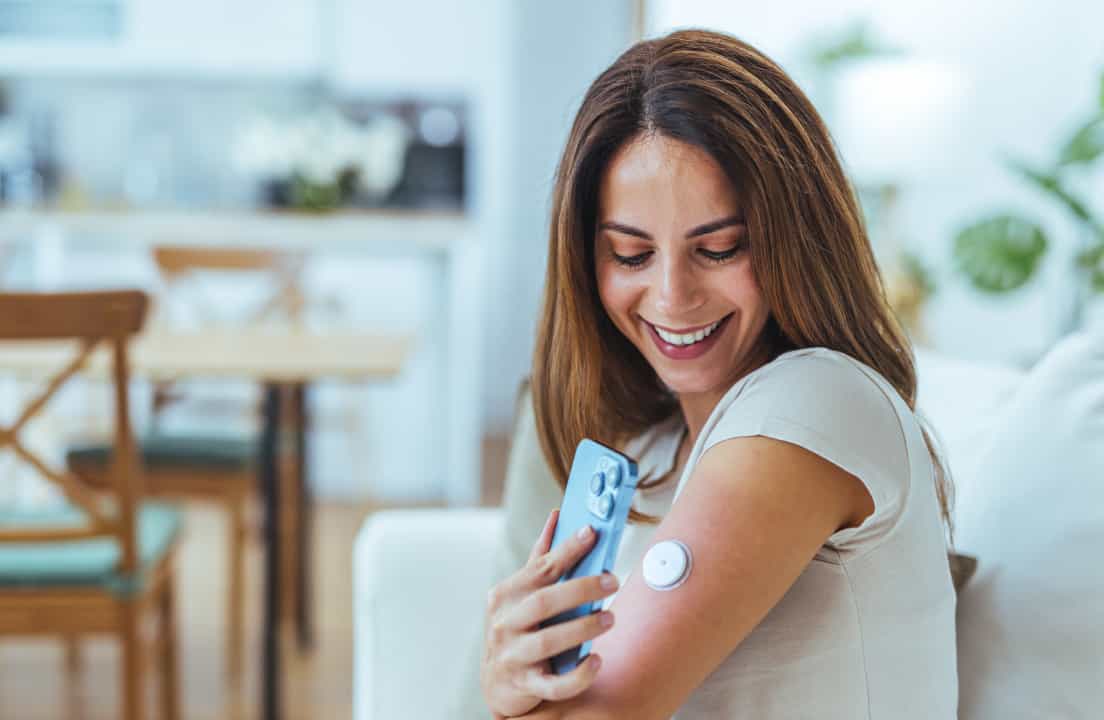
The concept is attractive: instead of drawing blood or inserting a sensor under the skin, a device could theoretically estimate glucose through the skin using optical, electromagnetic, or other technologies.
Despite considerable research and commercial interest, **reliable non-invasive glucose measurement remains substantially more challenging than conventional blood glucose meters and CGMs**.
In 2026, consumers should be particularly cautious about products claiming that a smartwatch, ring, or other wearable can directly and accurately measure blood glucose without an appropriate validated glucose sensor.
A device that displays a glucose-like number is not necessarily measuring blood glucose.
Consumers should distinguish between:
**glucose measurement**
and
**glucose prediction or estimation.**
This distinction is extremely important when evaluating new glucose-monitoring technology.
9. Flash and Wearable Sensors
Wearable glucose sensors have also become smaller and more convenient.
Modern sensor systems increasingly emphasize:
– Smaller sensor profiles
– Easier application
– Longer wear periods
– Smartphone integration
– Improved data visualization
– Automatic alerts
– Easier data sharing
These improvements are important because the effectiveness of a monitoring system depends not only on analytical performance but also on whether users can comfortably and consistently use it.
A highly accurate system that a person dislikes wearing may ultimately be less useful than a slightly less sophisticated system that they can use consistently.
10. Comparing the Main Technologies
| Technology | Measures | Continuous data | Alerts | Finger-stick required | Main advantage |
|---|---|---|---|---|---|
| Traditional glucometer | Blood glucose | No | Usually no | Yes | Simple and affordable |
| Smart glucometer | Blood glucose | No | Limited | Yes | Connectivity and data management |
| Real-time CGM | Interstitial glucose | Yes | Yes | Usually not for routine readings | Continuous monitoring |
| Intermittently scanned CGM | Interstitial glucose | Sensor-based | Depends on system | Usually not for routine readings | Flexible wearable monitoring |
| Connected wearable platform | Primarily sensor-derived glucose plus other data | Yes | Depends on system | Usually not routinely | Combines glucose with lifestyle data |
| Non-invasive/optical concepts | Varies | Potentially | Varies | Intended to avoid finger-stick/sensor insertion | Convenience, but validation is critical |
11. Which Technology Is the Most Accurate?
There is no single answer that applies to every device.
Accuracy depends on:
– The specific device
– The sensor or test strip
– Manufacturing quality
– Calibration requirements
– Storage conditions
– User technique
– Physiological conditions
– The glucose level being measured
– Whether glucose is changing rapidly
It is therefore better to compare **specific devices using validated performance data** rather than saying that all CGMs or all glucometers are equally accurate.
A conventional blood glucose meter measures glucose from a blood sample, whereas a CGM measures glucose in interstitial fluid. Consequently, their readings can differ, particularly during rapid glucose changes.
12. Why Finger-Stick Meters Are Still Important
Despite the rapid development of CGM technology, traditional glucose meters have not become obsolete.
A finger-stick meter can remain valuable when:
– A CGM reading seems inconsistent with symptoms
– A CGM sensor is malfunctioning
– A sensor is unavailable
– Confirmation of a glucose reading is needed
– A person does not want to wear a sensor
– Cost or accessibility makes CGM impractical
For people who use insulin or are at risk of significant hypoglycemia, having access to a reliable backup glucose meter can be particularly useful.
13. The Importance of Accuracy Verification
Regardless of the technology, users should understand how to verify that their equipment is functioning properly.
For a conventional meter, this may involve a **manufacturer-provided control solution**.
For CGMs, users should follow the manufacturer’s instructions regarding sensor performance, replacement, and when a finger-stick measurement may be appropriate.
If a glucose result is unexpected or does not match symptoms, it should not automatically be assumed to be correct simply because it came from a modern device.
14. What Is the Future of Glucose Monitoring?
The direction of glucose monitoring is moving from isolated measurements toward **continuous, connected, and predictive systems**.
Future systems are likely to focus increasingly on:
– Smaller wearable sensors
– Longer sensor wear
– Improved accuracy
– Better integration with smartphones and smartwatches
– More sophisticated glucose prediction
– Automated alerts
– Integration with insulin-delivery systems
– Personalized data analysis
– Easier data sharing with healthcare professionals
The long-term goal is not simply to measure glucose more frequently.
It is to make glucose information **more useful and actionable while reducing the burden of monitoring**.
Conclusion
Blood glucose monitoring in 2026 includes a broad range of technologies, from traditional finger-stick meters to connected smart meters and wearable continuous glucose monitoring systems.
Traditional glucometers remain valuable because they are portable, relatively affordable, and directly measure glucose from a blood sample. Smart meters add connectivity and automated data management.
CGMs provide a major advantage by showing glucose trends and patterns rather than isolated measurements. Wearable and smartphone technologies further expand the usefulness of this information by connecting glucose data with activity, sleep, meals, and other health information.
At the same time, consumers should be cautious about claims surrounding emerging non-invasive glucose technologies. **Convenience does not automatically mean accuracy**, and a device should not be relied upon for diabetes management simply because it displays a glucose-related number.
Ultimately, the best glucose-monitoring technology depends on the individual’s medical needs, monitoring goals, lifestyle, cost considerations, and access to healthcare. The most advanced system is not necessarily the best system for every person—the most useful technology is one that provides reliable information and can be used consistently and correctly.